

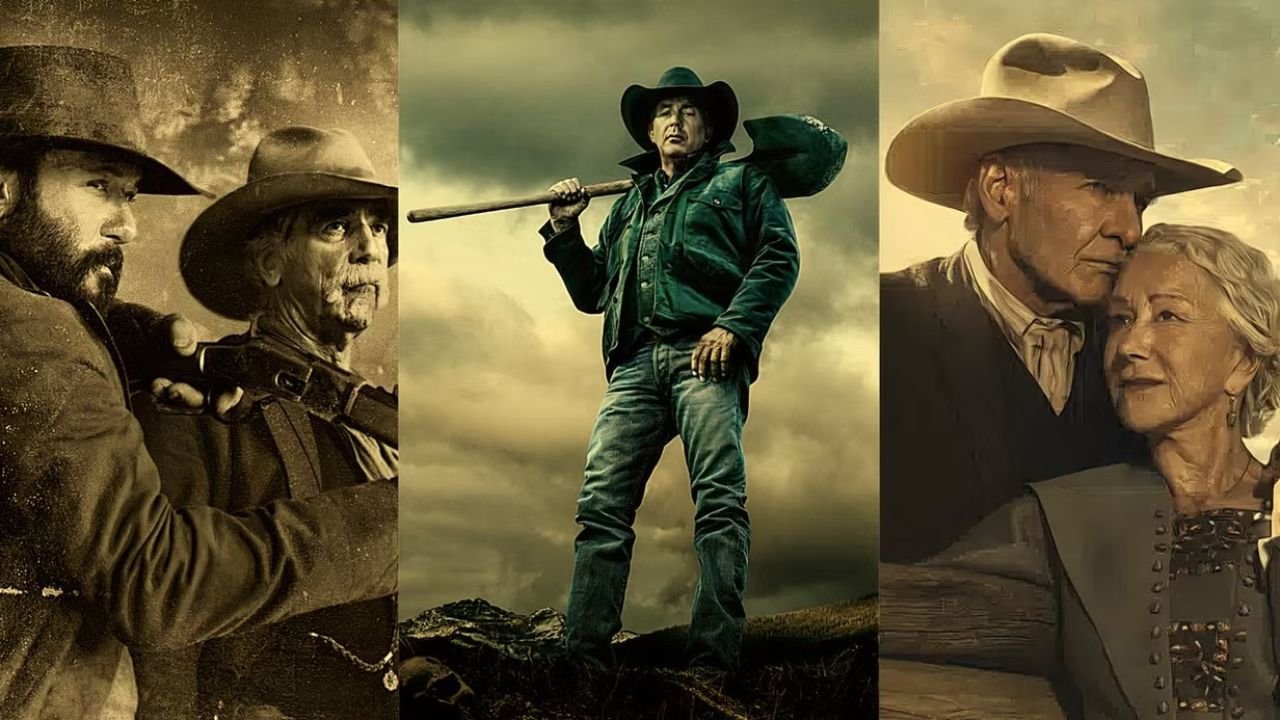
Since its 2018 premiere, Yellowstone has become a modern Western phenomenon, captivating audiences with the saga of the Dutton family. But the story doesn’t end there. Creator Taylor Sheridan expanded this world with the prequels 1883 and 1923, creating an interconnected “Taylor Sheridan Universe.” From family legacy to ranching conflicts, these series are more connected than fans might realize.
Here’s a complete guide to all the links between Yellowstone and its spin-offs.
1. The Dutton Family Legacy
The heart of all three shows is the Dutton family and their multi-generational saga:
- 1883: Follows James Dutton (Tim McGraw) as he leads his family westward to Montana.
- 1923: Chronicles the next generation with Jacob Dutton (Harrison Ford) and their struggles in Prohibition-era Montana.
- Yellowstone: Centers on John Dutton (Kevin Costner) defending the modern-day Dutton Ranch from outside threats.
The family tree is intricate, with James Dutton as John’s great-grandfather and Elsa Dutton as John’s great-aunt. This lineage reinforces the theme of family, legacy, and land across generations.
2. Law, Morality, and Reluctant Heroes
A recurring theme is the dual nature of Duttons—law-abiding citizens and ruthless defenders when necessary:
- Titles like deputy, livestock commissioner, and attorney general appear across generations.
- Characters wrestle with morality while protecting their land and family.
- Heroes often start reluctant, like Elsa Dutton in 1883, Spencer Dutton in 1923, and Kayce Dutton in Yellowstone.
3. Ranching and the Land
The Duttons’ connection to farming and ranching defines their survival:
- 1883: Establishing a new life and livelihood in Montana.
- 1923: Expanding the ranching empire started by James.
- Yellowstone: Maintaining a sprawling ranch amidst modern threats.
The land itself becomes almost sacred, shaping family values and fueling conflicts with outsiders.
4. Family Heirlooms and Traditions
Objects and traditions link generations:
- A Comanche knife passed from Elsa in 1883 to Spencer in 1923 symbolizes family continuity.
- Native American alliances, first through marriage in 1883 and later with tribal leaders like Thomas Rainwater in Yellowstone, highlight cooperation and shared struggles.
5. Outsiders and the Changing West
All three series explore the tension between tradition and modernity:
- Yellowstone depicts corporate and urban encroachment on ranch lands.
- 1923 shows the introduction of modern appliances and new philosophies.
- 1883 illustrates the hardships of moving westward while defending family and property.
6. Horses and Western Life
Horses are central to ranching, travel, and identity:
- 1883: Horses essential for the migration west.
- 1923: Key for ranching and travel.
- Yellowstone: Used for ranching, rodeos, and shows, emphasizing cowboy culture.
7. War Heroes in the Family
Many Duttons bring combat experience to defend their legacy:
- James Dutton fought in the Civil War.
- Spencer Dutton served in World War I.
- Kayce Dutton is an Iraq War veteran.
These experiences shape their leadership and resilience.
FAQs About Yellowstone and Its Spin-Offs
Q: Do I need to watch 1883 and 1923 to understand Yellowstone?
No, but they provide rich context for the Dutton family history.
Q: Are all spin-offs connected to Yellowstone?
Yes, they explore the origins and expansion of the Dutton family and ranch.
Q: Who is Elsa Dutton?
James Dutton’s daughter in 1883, great-aunt to John Dutton in Yellowstone.
Q: What role do Native American tribes play in the series?
They are both allies and rivals, highlighting land disputes and cultural tensions.
Q: Why is the land so important to the Duttons?
It symbolizes legacy, survival, and a spiritual connection central to their identity.
Conclusion
The Yellowstone universe is more than a modern Western—it’s a multi-generational epic about family, land, and legacy. From 1883 to 1923 and Yellowstone, each series builds on the last, connecting characters, traditions, and philosophies that define the Duttons.
For fans and newcomers alike, understanding these connections deepens the experience, showing that the past, present, and future of Montana are inseparably tied to the Dutton family.